
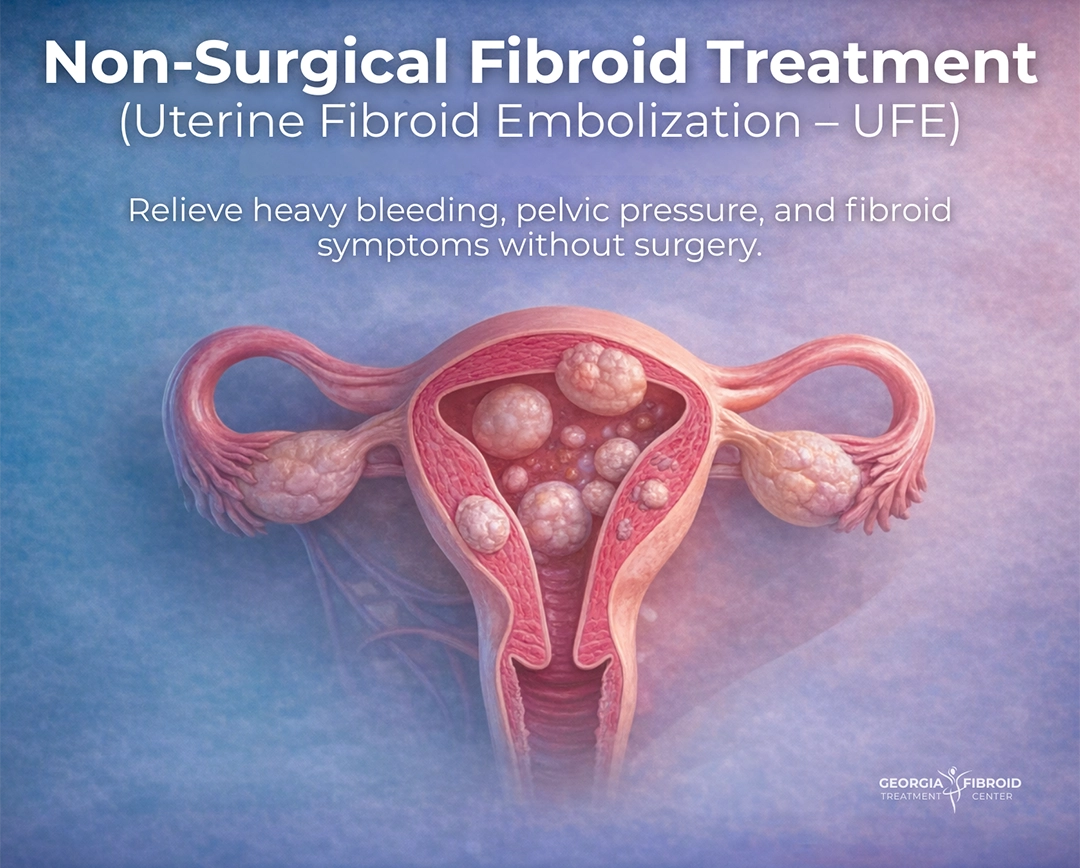
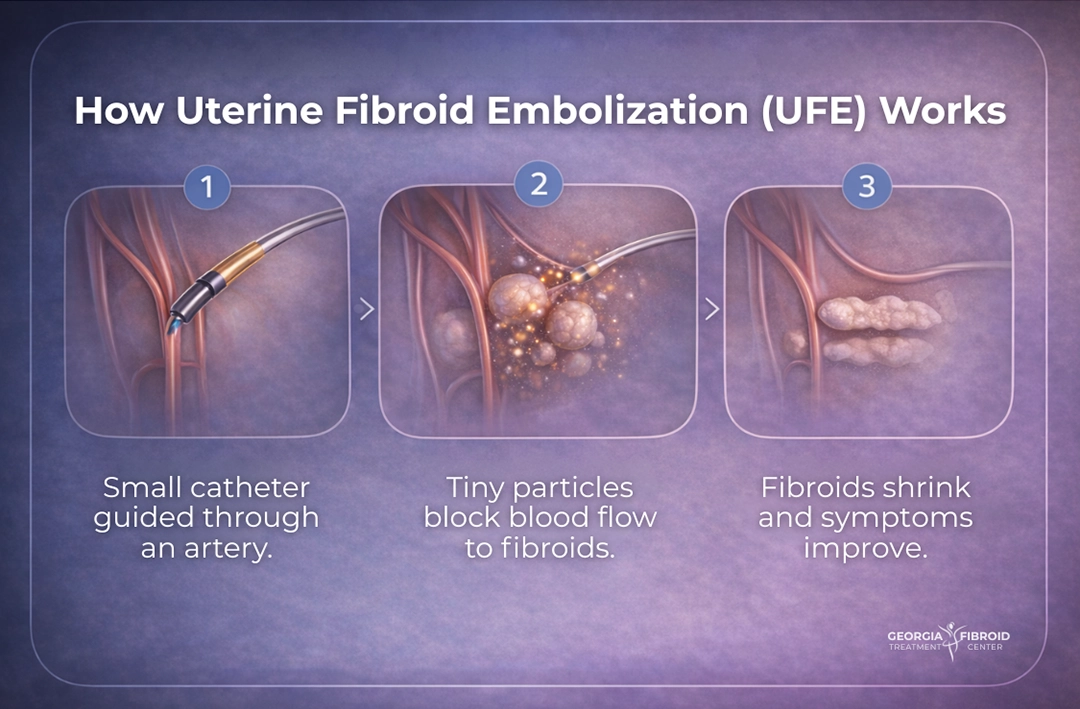
 If you are experiencing symptoms of uterine fibroids and searching for fibroid treatment in Atlanta, there are effective options that do not require surgery. At Georgia Fibroid Treatment Center, we specialize in Uterine Fibroid Embolization (UFE) — a minimally invasive procedure that treats fibroids by blocking their blood supply so they shrink over time. Many women choose UFE because it allows them to avoid hysterectomy, recover faster, and return to their normal lives with relief from heavy bleeding, pelvic pressure, and other fibroid symptoms.
Women from Atlanta, Sandy Springs, Marietta, Decatur, and surrounding communities visit our center for this advanced non-surgical fibroid treatment.



 Some women who experience chronic pelvic pain, pelvic pressure, or discomfort that worsens throughout the day may actually be suffering from Pelvic Congestion Syndrome (PCS) rather than fibroids. PCS occurs when veins in the pelvis become enlarged and congested, similar to varicose veins, leading to ongoing pelvic pain and pressure.
Studies indicate that 30% of women with chronic pelvic pain have PCS as the sole cause, with an additional 15% having it in combination with other issues.
Symptoms of Pelvic Congestion Syndrome may include:
Some women who experience chronic pelvic pain, pelvic pressure, or discomfort that worsens throughout the day may actually be suffering from Pelvic Congestion Syndrome (PCS) rather than fibroids. PCS occurs when veins in the pelvis become enlarged and congested, similar to varicose veins, leading to ongoing pelvic pain and pressure.
Studies indicate that 30% of women with chronic pelvic pain have PCS as the sole cause, with an additional 15% having it in combination with other issues.
Symptoms of Pelvic Congestion Syndrome may include:
- Chronic pelvic pain lasting more than six months
- Pelvic pressure or heaviness
- Pain that worsens after standing for long periods
- Pain during or after intercourse
- Visible varicose veins in the pelvic or upper thigh area
"Dr. Carson and his staff were very professional and caring from beginning to end. They explained everything before
hand, along the way, and during. Any doctor that gives you their personal cell number to call with any questions or concerns is top notch in my opinion. The world needs more Dr. Carson's!!!!"

"Exceptional surgical experience! Dr. Carson and Team were very attentive from initial consultation through post-surgical follow-up. I received clear information about my testing requirements and results, surgical options, insurance processing, and expectations during surgery and post-op. Dr. Carson and Team stayed in close contact with me via secured messaging and phone during my experience. I would highly recommend!"

"Dr. Carson had a very pleasant bedside manner. Him and his team was always available to answer questions, nights and weekends included. The staff was very personable. Thank you Dr. Carson, LaToya, Holly, and Simonie for your help, expertise, patience, and dedication during my process. It is very much appreciated."

"Dr. Carson and the staff were amazing. He was very helpful and gave me his personal cell to ask questions. My procedure has changed my life. I'm 3 months post and I feel incredible. My only regret is not finding Dr. Carson sooner."

"GVI is great!! The doctor & staff are very friendly & listen to your concerns. I really appreciate their conservative approach to treatment when necessary. As a
patient I felt heard & understood."

"My UFE procedure with Dr. Carson was a success! Dr. Carson and his staff were helpful and supportive and responsive with any questions and concerns pre and post procedure and I'd highly recommend them to anyone who is in need of a UFE!"

"I was treated with so much compassion and kindness during my preparation for my procedure. And the doctor did a phenomenal job and I am feeling so much better since my procedure. I recommend Dr Carson and his staff to anyone who is looking to receive the blessing that I received from them all. Thank You all so much!"

"Dr. Carson and his staff are so professional and helpful! I had the UFE procedure, after my procedure they called and checked up on me almost everyday. They answered any questions I had! I have been suffering from fibroids for years and I finally found the help I needed!!! Thank you!!!"

"Dr.Carson and the entire staff was amazing, I was very nervous before the procedure, they made me feel so comfortable... I am glad my gyn recommended Dr. Carson."

Doctor Carson was the most communicative, patient, and kind doctor I've ever encountered. He was always quick to answer any questions, and he put my mind at ease by explaining details about the procedure. My Uterine Fibroid Embolization was minimally invasive, which resulted in quick recovery. I'm already seeing signs of alleviated symptoms what was bothering me for the past couple of years. I am deeply grateful of Dr. Carson and the lovely nurses that helped me through this procedure.
