
What women in Atlanta and across Georgia should know about untreated symptomatic fibroids—and when to ask about UFE.
July is Fibroid Awareness Month, a time to bring a condition that is often minimized, misunderstood, or discussed only in whispers into the open. Awareness matters because uterine fibroids are common—but living with severe bleeding, exhaustion, pelvic pain, pressure, or a life organized around your period should not be treated as normal.
For many women, the greatest health risk is not simply having fibroids. It is spending years adapting to symptoms without realizing how much those symptoms are affecting the body, emotional well-being, relationships, work, and future health decisions. At Georgia Vascular Institute and Georgia Fibroid Treatment Center in Atlanta, potential patients may schedule a FREE consultation to learn whether their symptoms could be related to fibroids and whether Uterine Fibroid Embolization (UFE) may be appropriate.
Fibroids Are Common. Severe Symptoms Are Not “Just Part of Being a Woman.”
Uterine fibroids are benign, or noncancerous, growths that develop in or around the uterus. Some remain small and cause no symptoms. Others can produce heavy or prolonged menstrual bleeding, pelvic pain or pressure, an enlarged abdomen, frequent urination, constipation, back or leg pain, discomfort during sex, fatigue, and reproductive concerns.
The numbers help explain why Fibroid Awareness Month is so important:
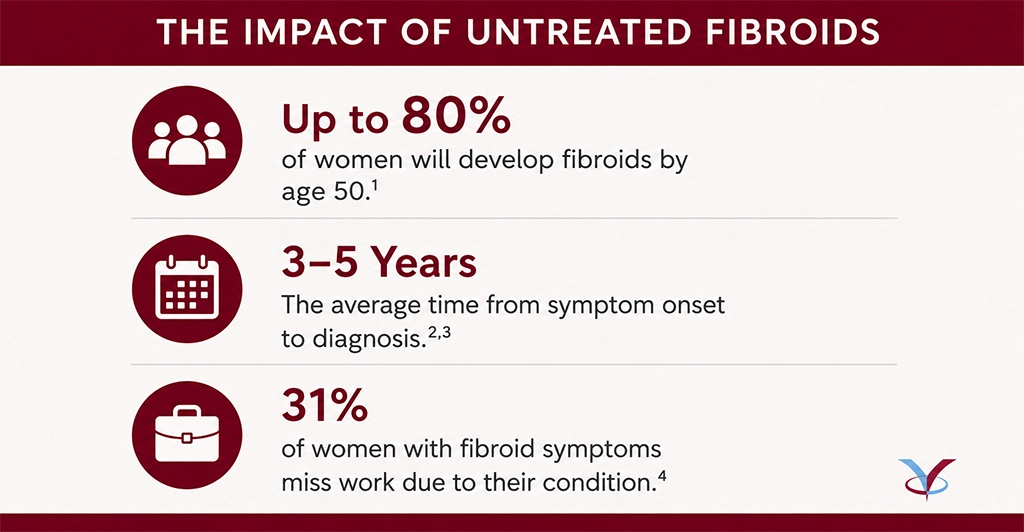
- More than 80% of Black women and approximately 70% of white women are estimated to develop uterine fibroids by age 50.[1]
- Approximately 30% of women with fibroids develop severe symptoms such as abnormal bleeding, anemia, pelvic pain or pressure, urinary or bowel symptoms, or infertility that may require intervention.[2]
- In a national survey, women delayed seeking treatment for an average of 3.6 years, and 32% waited more than five years after symptoms began.[3]
Those statistics reveal the real awareness gap: fibroids are widespread, but many women still spend years wondering whether their symptoms are “bad enough” to discuss. Fibroid Awareness Month is an opportunity to replace that uncertainty with information and action.
What Can Happen When Symptomatic Fibroids Are Left Untreated?
Not every fibroid requires a procedure. Small fibroids that are not causing symptoms may simply be monitored by a healthcare professional. The concern is untreated symptomatic fibroids—especially when bleeding, pain, pressure, or fatigue is persistent or worsening.
1. Ongoing Blood Loss Can Lead to Iron Deficiency and Anemia
Fibroids do not literally “absorb” iron. Instead, fibroid-related heavy menstrual bleeding can cause the body to lose blood and iron month after month. Over time, iron stores may fall, and iron-deficiency anemia can develop. Research shows that both heavy menstrual bleeding and iron deficiency can significantly reduce quality of life.[4]
Anemia may cause exhaustion, weakness, headaches, dizziness, shortness of breath, a racing heartbeat, difficulty concentrating, feeling unusually cold, or craving ice. A woman may begin arranging her schedule around low-energy days without recognizing that chronic blood loss is driving the problem. Severe anemia can become medically urgent and should never be ignored.
2. Pelvic Pressure Can Affect the Bladder, Bowels, Back, and Daily Movement
Fibroids can grow or increase in number over time. Depending on where they are located, they may press against the bladder or rectum, contribute to frequent urination or constipation, or create a constant sensation of pelvic fullness. Larger fibroids may also contribute to back, hip, or leg discomfort and make exercise, sleep, travel, and everyday movement less comfortable.
These “bulk symptoms” are sometimes treated as separate problems rather than signs that the uterus has enlarged. That can lead women to seek help for bladder, digestive, or back symptoms without anyone connecting the full pattern.
3. Pain and Heavy Bleeding Can Reshape Quality of Life
The impact of fibroids extends beyond a menstrual cycle. Women may miss work, avoid travel, decline social plans, carry extra clothing, map every nearby restroom, or worry about bleeding through clothes in public. Pelvic pain and discomfort during intimacy can also affect confidence, relationships, and emotional well-being.
In the same national survey, 66% of women were concerned about missing work because of fibroid symptoms, and 24% of employed respondents believed their symptoms kept them from reaching their career potential.[3] That is not a minor inconvenience. It is a measurable quality-of-life and economic burden.
4. Some Fibroids Can Affect Fertility or Pregnancy
Many women with fibroids become pregnant without difficulty. However, the size, number, and location of fibroids can matter. Certain fibroids may interfere with implantation, contribute to infertility, or increase the risk of pregnancy complications. Women who are pregnant, trying to conceive, or considering future pregnancy should discuss fibroids and reproductive goals with the appropriate medical specialists before choosing a treatment path.[2]
When Is It Time to Stop Waiting?
A medical evaluation is appropriate when symptoms are interfering with your health or your life. Consider speaking with a healthcare professional if you experience:
- Periods that are extremely heavy, prolonged, or include large clots
- Fatigue, dizziness, shortness of breath, headaches, or ice cravings
- Pelvic pain, pressure, bloating, or an abdomen that appears enlarged
- Frequent urination, difficulty emptying the bladder, or constipation
- Back, hip, leg, or sciatic-like discomfort without a clear explanation
- Pain or pressure during sexual intimacy
- Symptoms that are causing missed work, canceled plans, or emotional distress
- A fibroid diagnosis with worsening symptoms or unanswered questions
Sudden very heavy bleeding, fainting, chest pain, severe shortness of breath, or symptoms during pregnancy may require urgent medical attention. Fibroid Awareness Month should encourage women to seek answers earlier—not to wait until symptoms become a crisis.
UFE: A Minimally Invasive Fibroid Treatment Option in Atlanta
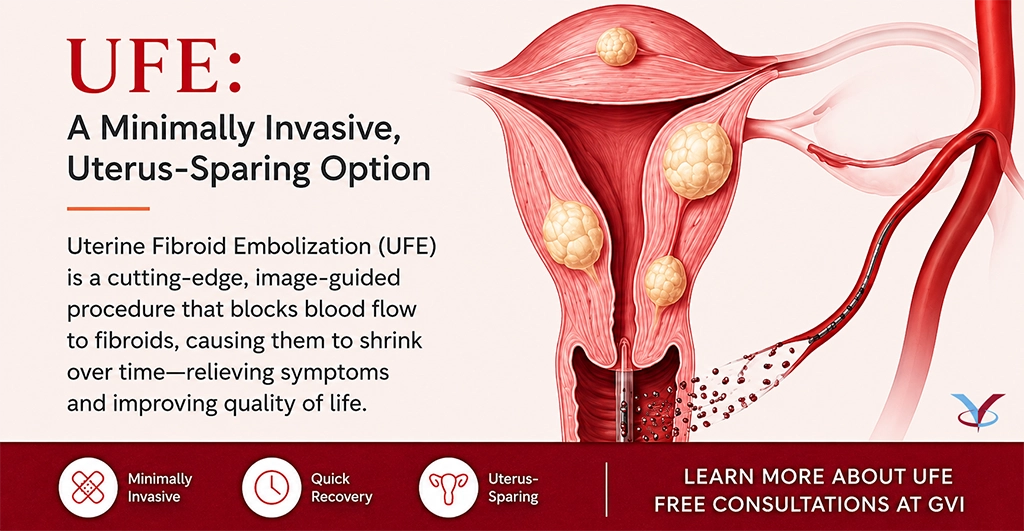
Uterine Fibroid Embolization (UFE) is a minimally invasive, image-guided procedure performed by an interventional radiologist. Through a very small access point, a catheter is guided to the uterine arteries. Tiny particles are then delivered to reduce blood flow to the fibroids, causing them to shrink over time while preserving the uterus.
UFE is generally performed as an outpatient procedure and does not require a large surgical incision. According to RadiologyInfo, a patient-education resource from the American College of Radiology and Radiological Society of North America, nearly 90% of patients experience significant or complete relief of fibroid-related symptoms after UFE.[5] Individual results vary, and a consultation is necessary to determine whether UFE is appropriate for a patient’s symptoms, imaging, medical history, and personal goals.
Women who have been told to “just live with” heavy bleeding or pain—or who want to understand whether there is a non-surgical option—can request a FREE consultation with Georgia Vascular Institute and Georgia Fibroid Treatment Center. The consultation is an opportunity to ask questions, review symptoms, and learn whether further evaluation for UFE makes sense.
This Fibroid Awareness Month, Make Awareness Personal
Fibroid Awareness Month is not only about knowing that fibroids exist. It is about recognizing when symptoms have quietly become the center of your life. It is about understanding that heavy bleeding can affect iron levels, persistent pressure can affect multiple body systems, and chronic pain can take a real toll on work, relationships, and emotional health.
Most importantly, awareness means knowing that you deserve answers. You do not have to wait until the bleeding is unbearable, the anemia is severe, or your quality of life has been reduced for years before asking about your options.
READY TO LEARN WHETHER UFE MAY BE RIGHT FOR YOU?
Georgia Vascular Institute and Georgia Fibroid Treatment Center offer FREE consultations for potential patients. Call (770) 506-4007 or request an appointment online.
Medical note: This article is for general education and does not replace individualized medical advice, diagnosis, or emergency care.
Sources
1. The Health Disparities of Uterine Fibroids for African American Women (NIH/PMC).
2. Epidemiology and Management of Uterine Fibroids (International Journal of Gynecology & Obstetrics, 2020).
3. The Impact of Uterine Leiomyomas: A National Survey of Affected Women (American Journal of Obstetrics & Gynecology, 2013).
4. The Relationship Between Heavy Menstrual Bleeding, Iron Deficiency, and Iron Deficiency Anemia (American Journal of Obstetrics & Gynecology, 2023).
5. Uterine Fibroid Treatments, UFE, MRgFUS (RadiologyInfo.org, reviewed by ACR/RSNA).
6. Fibroid Awareness Month Toolkit (Society for Women’s Health Research).