
 Chronic knee pain from osteoarthritis can make everyday activities — walking, climbing stairs, standing for long periods — difficult and frustrating. If medications, injections, or physical therapy haven’t provided lasting relief, you may be looking for a non-surgical option.
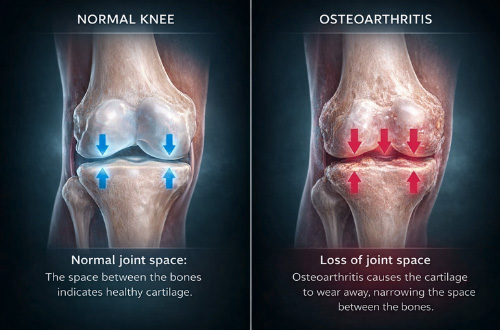
Osteoarthritis is the most common form of arthritis and is caused by the cartilage of the joint being worn down over time or trauma. It is most common in the knees, hips, hands, and spine. It cannot be reversed. As a result there is chronic inflammation around the joint. However, there are some treatments available to help improve joint function or reduce pain.
Over 30 million people in the US have osteoarthritis, also known as degenerative joint disease. The risk of developing osteoarthritis increases with overuse of the joint, injury to the joint, age, and obesity. Women are more likely to develop osteoarthritis and genetics can indicate increased risk for osteoarthritis.
Chronic knee pain from osteoarthritis can make everyday activities — walking, climbing stairs, standing for long periods — difficult and frustrating. If medications, injections, or physical therapy haven’t provided lasting relief, you may be looking for a non-surgical option.
Osteoarthritis is the most common form of arthritis and is caused by the cartilage of the joint being worn down over time or trauma. It is most common in the knees, hips, hands, and spine. It cannot be reversed. As a result there is chronic inflammation around the joint. However, there are some treatments available to help improve joint function or reduce pain.
Over 30 million people in the US have osteoarthritis, also known as degenerative joint disease. The risk of developing osteoarthritis increases with overuse of the joint, injury to the joint, age, and obesity. Women are more likely to develop osteoarthritis and genetics can indicate increased risk for osteoarthritis. 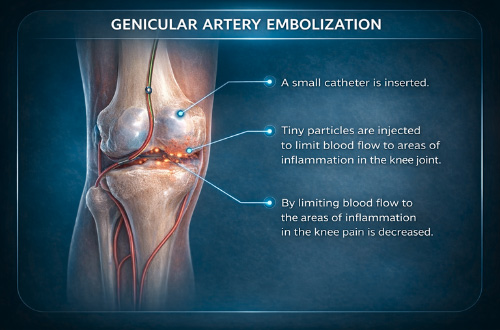 Genicular Artery Embolization (GAE) is a minimally invasive procedure that reduces inflammation and blood flow to painful areas of the knee joint, helping decrease pain and improve mobility.
This non-surgical alternative is performed in an outpatient setting to reduce the inflammation to these areas around the knee and thus reducing the pain.
Though the procedure does not cure osteoarthritis, the goal of GAE is to reduce the patients knee pain and therefore reducing the use of opioids and pain killers as well as injections. Improving mobility and therefore the patient’s quality of life.



When Knee Pain Affects Your Life: GAE Treatment Atlanta
Knee pain has a way of shrinking your world. It changes how long you stand. ...

Treat Chronic Osteoarthritis Knee Pain – Without Major Surgery
Knee osteoarthritis (OA) is a progressive joint disease that causes pain, stiffness, and limited motion ...

Genicular Artery Embolization: Non-Surgical Treatment for Chronic Knee Pain in Atlanta
Do you suffer from knee pain, stiffness, swelling, and a sensation of instability or locking ...